Introduction
As more candle products enter the market, buyers are starting to notice new materials like sand wax. Understanding sand wax vs candle wax is becoming increasingly important.
Compared to traditional candle wax, sand wax offers a different way of making and using candles. For businesses and distributors, understanding these differences, particularly the nuances of sand wax vs candle wax, can help with product selection and market positioning.
In this article, we’ll break down how sand wax compares to traditional candle wax and where each one fits best in the context of sand wax vs candle wax.
Form and Structure
The most obvious difference between sand wax and traditional candle wax is the form.
Traditional candle wax usually comes in solid blocks, flakes, or slabs. It needs to be melted before being poured into containers.
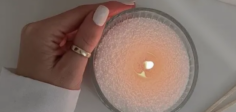
Sand wax, on the other hand, comes in small granules. It can be poured directly into a container without any heating process.
This structural difference changes the entire way candles are made and used.
Production Process
Traditional candle making involves several steps: melting the wax, controlling temperature, adding fragrance, and pouring into molds or containers.
Sand wax simplifies this process.
There is no need for melting or temperature control. The wax is ready to use immediately after pouring and inserting a wick.
For businesses, this means lower production complexity and faster turnaround time.
User Experience
The user experience is also quite different.
Traditional candles are usually fixed in shape once produced. After burning, they cannot be easily reused.
Sand wax candles are more flexible. Users can refill, reshape, or reuse the wax by replacing the wick.
This adds a more interactive element, which is especially attractive in DIY and gift markets.
Appearance and Design Flexibility
Traditional candles tend to have a smooth and uniform finish.
Sand wax creates a more textured and natural look. It allows layering, mixing colors, and creating customized designs inside the container.
This flexibility makes sand wax suitable for creative products and visually driven markets.
Business and Market Positioning
From a business perspective, the two types of wax serve different purposes.
Traditional candle wax is widely used in established markets such as scented candles and home fragrance products.
Sand wax is often positioned as a newer, more creative option. It works well for DIY kits, decorative candles, and gift products.
Some businesses use both types to cover different segments of the market.
Conclusion
Sand wax and traditional candle wax are not direct replacements, but different tools for different needs.
Understanding their differences helps buyers choose the right material based on production method, target market, and product style.
For businesses looking to introduce something new and flexible, sand wax offers a practical alternative.
Contact Us
If you are looking for a reliable supplier of sand wax and candle materials, Waxraw is here to support your business.
We provide bulk supply, stable quality, and customized packaging solutions for global buyers.
Website: www.waxraw.com
Email: [email protected]
WhatsApp: +86 17638410293
 English