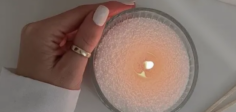
Gel wax is renowned for its crystal-clear appearance, making it ideal for decorative and embedded candles. However, achieving perfect transparency can be challenging, and temperature gradients play a critical role in determining the final clarity of your gel wax candles.
1. Understanding Temperature Gradients in Gel Wax
A temperature gradient occurs when there is a variation in temperature within the gel wax as it cools and sets. Uneven heating or cooling can cause differences in polymer density and trapped air, leading to cloudiness or bubbles.
- Top-to-bottom gradients: Faster cooling at the surface can create a cloudy top layer.
- Side-to-center gradients: Uneven wall contact with a container may cause internal opacity.
2. Effects of Temperature on Transparency
- High Pour Temperature:
Pouring gel wax too hot can cause excessive shrinkage as it cools, creating small air pockets and microbubbles. - Low Pour Temperature:
Pouring at too low a temperature can result in poor layer adhesion and uneven transparency. - Controlled Cooling:
Allowing gel wax to cool slowly and evenly ensures the polymer matrix sets uniformly, preserving the crystal-clear look.
3. Tips to Maintain Clarity
- Preheat Containers: Ensures wax doesn’t cool unevenly when poured.
- Stir Gently: Avoid introducing air bubbles during mixing.
- Layer Pouring: For thicker candles, pour in layers to reduce internal temperature differences.
- Avoid Drafts: Keep candles away from vents and open windows during cooling.
4. Conclusion
Temperature gradients significantly influence the transparency of gel wax. By controlling pour temperature, preheating containers, and managing cooling rates, candle makers can achieve the perfect crystal-clear appearance that makes gel wax candles so appealing.
At Waxraw, we supply premium gel wax and professional guidance to help candle makers worldwide maintain clarity, consistency, and aesthetic quality.
📩 Contact us: [email protected]
🌐 Website: www.waxraw.com
📱 WhatsApp: +86 17638410293
 English